Sleep + Recharge
UX Research, Visual Design, and Content Writing
Email Newsletter
Focus
Infographics
Content Writing
Research
Science Translation
Visual Design
Email Newsletter
Coherent Read
Tools
Sketch
Adobe Illustrator
Photoshop
Keynote
Unsplash
Preview
Adobe Acrobat
Overview
With 89% of people in the Nation reporting sleep problems, a read on how to get a better night’s sleep and how sleep works seems relevant for people who may want to learn more about their sleep patterns in a simple and engaging way. This project takes sciencey information, which can be dense at times, and utilizes infographics, a natural tone, and connected hierarchy for an informative, clear, and practical read, that may apply to readers’ lives and benefit their quality of sleep.
Current Problem
Research on health, and research in general, may take more time to understand and fully read than most people are willing to give to the enterprise. The time, technical terms, and effort to understand the article or paper may create a cognitive overload of information, where readers are more focused on piecing together the writing rather than on understanding the message. Because the effort it takes to read the science may override the enjoyment of learning something new, people may disengage from the content. This ultimately limits how often people search for information on health and how people may be able to relate to and connect useful information to their lives, when awake or asleep.
Envisioned Goal
The purpose is to communicate science on sleep in a creative but succinct way so that it has the potential to be effective in people’s lives.
With this, the focus is on emphasizing important and relevant information but translating it in an absorbable and informative way, so that content is more enjoyable, more interactive, and more likely to be remembered. This way, people will be informed about science, while having the ability to apply it to their lives. It is accessible for every type of reader.
The goal is to clearly present the message, about sleep processes and benefits, with the least amount of cognitive effort, so that people will be able to learn about health, possibly feel bemused, and choose to actively apply the content to their different lifestyles. They will be able to share their knowledge, interesting insights, and new opinions with other people as well.
Keywords & Phrases
Sleep, Cycles, Waves, REM, NREM, Sleep Benefits, Sleep Stages, Recommended Hours, Koalas, Rest
Science Translation Problem and Accessibility of Science → Application to People’s Lives.
Problem and Goal Frontload.
Project Objectives.
Bring together a proto-persona’s key points, visual design elements, and visual and written content for a learnable read that packs a friendly punch.
01 . . . . . . . . . . . . . . . . . . . . . . . . . UX Design
02 . . . . . . . . . . . . . . . . . . . . . . Visual Design
03 . . . . . . Communication Translation

01 UX Design
Define Research Topics + Synthesize Findings + Connect the Pieces + Plan for Visuals
The Design Focus
◈ Find and Select relevant research.
◈ Utilize infographics, imagery, and other visuals to share the information.
◈ Draft a plan for the visual concepts based on how people learn content.
To define what sleep topics will be highlighted and presented to people, an initial research phase determined the types of topics being shared online and what themes seemed to appear more often than other themes. With a mix of online content readily available, select topics were chosen for the concise newsletter read. Based on the research, some more common and repetitive, and some less frequent but fascinating, the visual plan was loosely drafted, so that it has the flexibility to be adjusted during this project journey.
02 Visual Design
Select a visual theme, with an emphasis on colors, layout, and hierarchy.
The Design Focus
◈ Tone of voice and text choice, with titles like “Benefits,” and “How to.”
◈ Hierarchy, with space to take in, process, and connect content.
◈ Color choice, to highlight key visuals and text and pair them together.
Visual information portrays a message and connects various topics together in the order it presents content, it’s hierarchy, and the way it is pieced together with image sizes and text placement, it’s layout. The overarching theme of sleep is meant to provide restful content for readers, so colors and fonts were chosen to represent this naturally occurring process. The layout and hierarchy connect this theme, and related content utilize visuals and text, which combine for a stronger message and reader experience.
03 Communication Translation
To the point text + related imagery + engaging and conversational tone + mood match
The Design Focus
◈ Tone of voice, that is relatable, understandable, real, clean, and clear.
◈ Passive to active learning, with content taken off the page and into life.
◈ Back and forth learning, with text and related images throughout the read.
A conversational tone engages the reader and provides fluency in relating to the message while giving opportunity to interact with content. For this read, interacting is looking at the visuals, taking time to process the content, and referring to it later, rather than disengaging by briefly scanning the material and leaving the email page. If it is relevant, piques their interest, and indicates how it may benefit them, the message may anchor with individual understanding and be applied with intrigue, curiosity, and engagement.
Sleep Content & Research Pivot
Prioritizing what sleep information to share and what topics work together for a substantial, focused, and engaging read.
Sleep Questions ⸾ Selection ⸾ Pivot ⸾ Redirection ⸾ Message
During my investigation on sleep topics, I ended up with content that ranged from sleep stages to sleep benefits, to what makes you fall asleep. The more I searched the more I realized how much content was out there. I originally thought I would just write about sleep, but I didn’t realize how much breadth that encompassed. With this continuing expanse of content, I realized sharing too much content with a broad focus might actually cause readers to be distracted and be
surface level. So, I had to consolidate the information that seemed related and could connect enough to provide enough similarity and overlap but with variety to keep things interesting. This would focus the content, provide more depth for the reader to process, and be a (good starting place), where readers may look into the topics in more detail later or move through their own reading tangents at their own pace, if they’d like to. (break up into 2 sentences) From the research ^, 5 themes were chosen.
Narrow in on 5 Topic Themes
The themes are landing points for people to take in content and learn about sleep pathways. The chosen sleep themes from initial research.
Cycles
Benefits
How to Fall Asleep
Sleep Stages
Brain
Impact of Sleep on the Body
Ways to Improve Sleep Patterns
Defining the Sleep Process
How much Sleep is Best for Various Ages
Sleep Cycles Around Us
With a general population of people, who are the users of this read, the benefits of sleep and how sleep interacts with the body appear most applicable. Specific explanations on the process, cycles, and quantity of sleep are places to jump in to learn more details, with interesting facts interspersed through the writing and visuals.
Sleep themes + their pathways

Users
People who need sleep, people who would interact with an online article on health, people who are normalized to the speed of the tech world.
Parent → Employee → Graduate → Aunt → Sister
With people sleeping for 1/3 of their lives, and with fewer than x people needing less than 6 hours of sleep a night, link, the user focus is able to be generalized to most people. For the purpose of the email newsletter, the user group consists of people who have access to email and are used to technology in their lives.
Protopersona ~ Abigail
Abigail is a city resident who commutes by train to work every day. She has her day job and her after work hobbies, which she takes time to work on in the early evenings at the local rock climbing gym and the pop-up exhibits around the art’s district. Abigail doesn’t have much time to read since most of her day she completes and learns software languages and relaxes with friends during her off hours. While she doesn’t get much time for extracurricular reading, since she likes to use her time for other activities, she does enjoy learning new information, of course, with a good story.
Assumptions | She has multiple ways to access health information, Her relationship to time is different in a tech world, and she used to technology in her daily life with smart devices, computers, and smart phones.
Constraints | She has limited time to read through articles. Interest-wise, she utilizes her time for other activities.
Behaviors | She catches up on business, news, and emails during her commute to work. She shares links, screenshots, and interesting articles to her friend and family group chats via her phone. She sleeps when she has time, but wouldn’t mind learning other ways to rest and get energized for her day.
Frustrations | How does she make the most of her day with a mix of work, social, and family events? Constant spam emails with promotions, online advertisements, and commercial news. When she reads health articles, 1 topic might take multiple pages and be exhaustive in writing.
Needs + Goals | She needs emails to clearly state what they are sharing and to make things simple regarding clicking and scrolling through content. She needs short read times with a mix of facts consolidated together, something light to read while she gets ready for the hustle and bustle of her work day.

Lorem Ipsum , Lorem Ipsum, Lorem Ipsum, Lorem Ipsum , Lorem Ipsum, Lorem Ipsum, Lorem Ipsum , Lorem Ipsum, Lorem
Theory
Lorem Ipsum
Hypothesis
Lorem Ipsum
HMW
How does the read piece together and communicate its message to the users, how does this assembly give context to the message, could be learned and assimilated well, and retrieved for actual use in their lives. HMW locate key information and share it in 1 place?
Goal
Lorem Ipsum
Strategy
Lorem Ipsum
~ Problem Statement ~
Most People Universally
+ + + Energy
CONTENT COPY: “Keep the body’s defenses strong & capable. During rest, you create protective antibodies, which combat illness. You also build up your energy, so you can fight bugs and stay healthy.”
⬆ Social & Emotional Skills
Intention / Why:
Benefits, Context, Share
Intention / Why:
Stronger Immune System (P1 of H3)
Intention / Why:
CONTENT COPY: Sleep quality, quantity, and satisfaction impact how energized you feel for the day. Increased sleep satisfaction = stronger feelings of energy and positive emotions.
CONTENT COPY: When you are well rested, you are better able to recognize emotions in other people. Getting good sleep sustains your emotional empathy, so get some rest and emote!
Intention / Why this starts and people would be interested . . .
CONTENT COPY:
+ Lower rates of ♡ disease
+ Preventing depression
+ Lower Inflammation
+ Greater physical output
+ Increased concentration
How To Do It
Intention / Why: Wrap it Up & Link/ Connect to the next section
CONTENT COPY:
+ Less Noise
+ Cooler Temperatures
+ Consistent Time for Bed
+ Get a good pillow
+ Be active during the day
Email Design Process, Piecing it Together
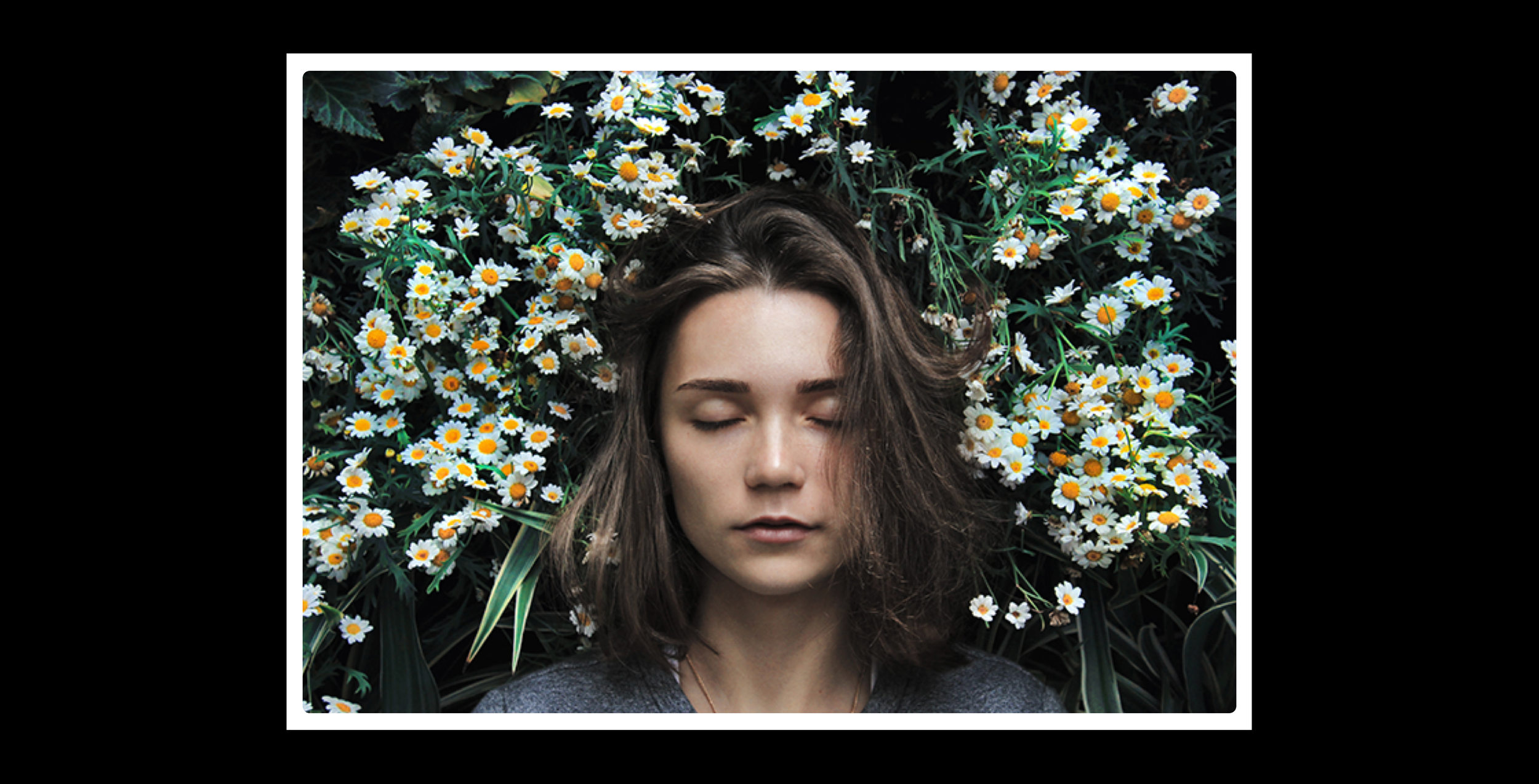
Reader’s Sleep Stages + Cycles
Sleep Process, what is being shared, related to everyone.
With people naturally moving into sleep, (even) with their different jobs, travel, and destinations, it seemed relevant to share about the sleep process, how it happens to everyone, How much sleep they should get across their life span, depending on how many years they’ve lived here, what there age is.
Rapid Eye Movement (REM) + Non-rapid Eye Movement (NREM) in Sleep
REM | Lorem Ipsum Dolores, Lorem Ipsum Dolores, Lorem Ipsum Dolores.
NREM | Lorem Ipsum Dolores, Lorem Ipsum Dolores, Lorem Ipsum Dolores.


3 Themes Revisited
Visual Design
UX Design
Science Reframe
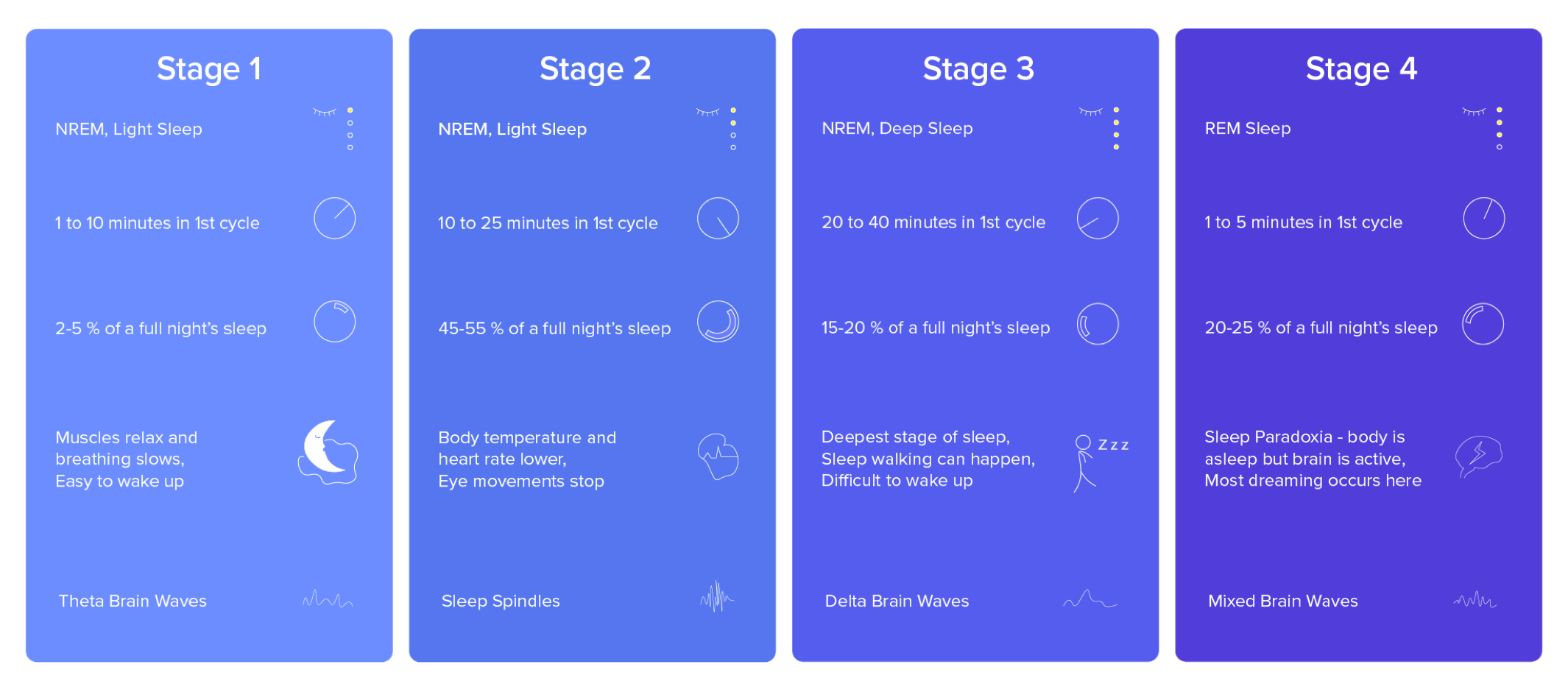
4 Sleep Stages, Infographic # 1
Visuals and text combine for a (coherent) take on the sleep stages and their details.
What happened here in the design process and the intention for the user!
Visual Design:
UX Design:
Science Reframe:
Science Visuals
4 Sleep Stages, Infographic # 2
Visuals and text combine for a (coherent) take on the sleep stages and their details. New Colors and Icons!
What happened here in the design process and the intention for the user!
Visual Design:
UX Design:
Science Reframe:
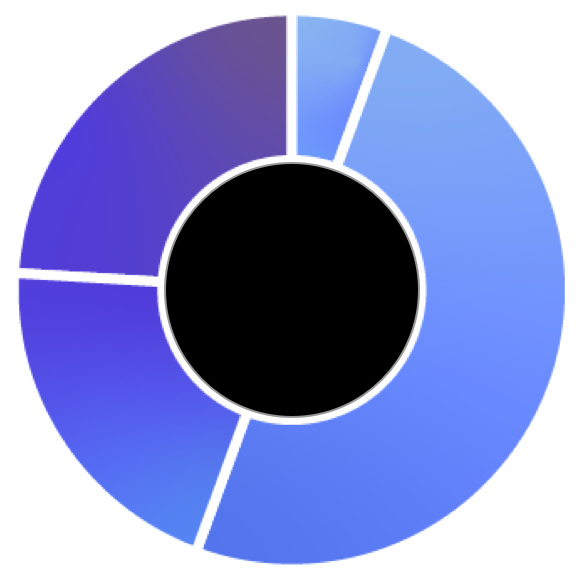
Sleep Infographic 2, Time Graph
Full Night’s Sleep
CONTENT COPY:
Intention/ Why: List how much sleep is recommended for different age groups simply and in partnership with the doughnut graph, which shows how long overall you would be in each stage during sleep.
Toddlers: 11 - 14 hours
Children: 9-11 hours
Teenagers: 8-10 hours
(Young) Adults: 7-9 hours
Well-Aged: 7-8 hours
Use a second graph to relay information connected to the stages, shown through the 1st infographic. The second
The second graph had enough information related to it that it could be contained in it’s own infographic and its own section. While this section stands on its own it also links with the 4 sleep stages by capturing the total amount of time (around) a person is
Stage 1
2- 5%
Stage 2
45-55%
Stage 3
15-20%
Stage 4
20-25%
moving through the 4 stages at night, while the above (1st) graph moving through the 4 stages at night, while the above (1st) graph own it also links with the 4 sleep stages by capturing the total amount of time (around) a person is moving through the 4 stages at night, while the above (1st) graph indicates 1 cycle of sleep versus the total cycles of sleep a person may move through during sleep. Additionally each cycle varies slightly in how long a person is in each stage so this graph intends to show the overall % , which would be different for each cycle, a person averages 3-4 cycles a night, and most likely nuanced for each person as well.
% in Each Stage
With a general population of people, who are the users of this read, the benefits of sleep and how sleep interacts with the body appear most applicable. Specific explanations on the sleep process, the cycles, and quantity of sleep are places to jump in to learn details on sleep with interesting facts.
Specific explanations on the sleep process, the cycles, and quantity of sleep are places to jump in to learn details on sleep with interesting facts interspersed throughout the writing and in the.
A mix of colors, layout, and graphics add, provide another dimension. With interesting facts interspersed throughout the writing and in the visuals to draw readers into other cool places.
Layout
Visual & Text Choices
Color
Lorem ipsum colors and design choices
Hierarchy
Specific explanations on the sleep process, the cycles, and quantity of sleep are places to jump in to learn details on sleep with interesting facts interspersed throughout the.
. . . . . . . . . . . . . . . . . . . .
. . . . . . . . . . . . . . . . . . . . .
Tone of Voice
Lorem Ipsum Dolores, Lorem Ipsum Dolores, Lorem Ipsum Dolores, Lorem Ipsum Dolores, Lorem Ipsum Dolores
Text Choice
Lorem Ipsum Dolores, Lorem Ipsum Dolores, Lorem Ipsum Dolores, Lorem Ipsum Dolores, Lorem Ipsum Dolores
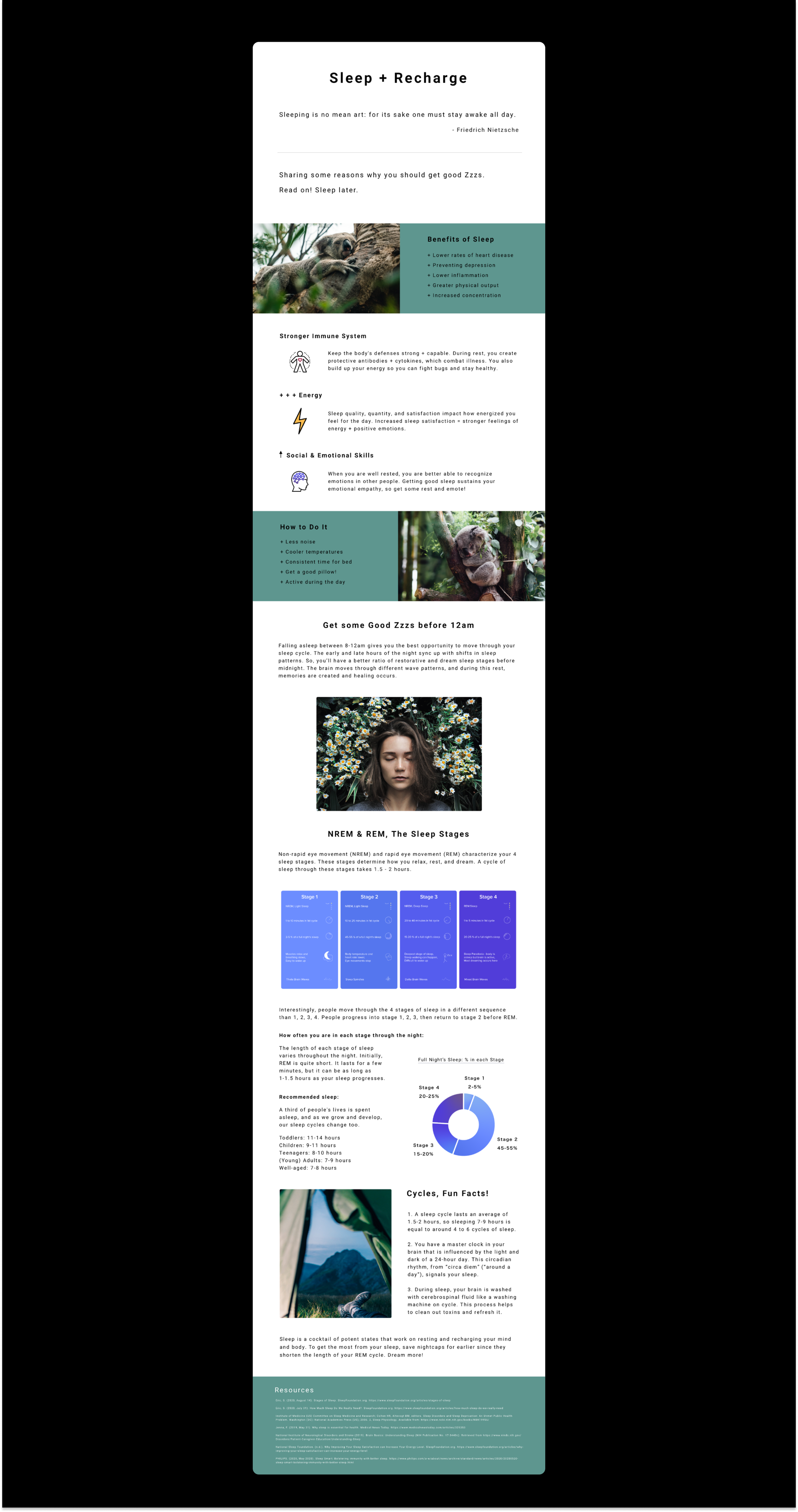
Sleep + Recharge Concept to Newsletter, but for email!
Lorem Ipsum, Lorem Ipsum, Lorem Ipsum, Lorem Ipsum, Lorem Ipsum, Lorem Ipsum, Lorem Ipsum, Lorem Ipsum.
Write here . . .
Lorem Ipsum, Lorem Ipsum, Lorem Ipsum, Lorem Ipsum, Lorem Ipsum, Lorem Ipsum, Lorem Ipsum, Lorem Ipsum, Lorem Ipsum.
Lorem Ipsum, Lorem Ipsum, Lorem Ipsum, Lorem Ipsum, Lorem Ipsum, Lorem Ipsum, Lorem Ipsum, Lorem Ipsum, Lorem Ipsum.
Lorem Ipsum, Lorem Ipsum, Lorem Ipsum, Lorem Ipsum, Lorem Ipsum, Lorem Ipsum, Lorem Ipsum, Lorem Ipsum, Lorem Ipsum.
People remember around 80% of what they see versus 10% of what they hear and 20% of what they read. (Link)
Resources, Links, & Articles
“A cool fact here about sleep that is listed out and easy for people to read.”
◈ Lorem Ipsum ◈
Lorem Ipsum
“A cool fact here about sleep that is listed out and easy for people to read.”
Lorem Ipsum
“A cool fact here about sleep that is listed out and easy for people to read.”
Lorem Ipsum
Lorem Ipsum
Lorem Ipsum
“A cool fact here about sleep that is listed out and easy for people to read.”
“A cool fact here about sleep that is listed out and easy for people to read.”
“A cool fact here about sleep that is listed out and easy for people to read.”
Lorem Ipsum
Lorem Ipsum
Lorem Ipsum
“A cool fact here about sleep that is listed out and easy for people to read.”
“A cool fact here about sleep that is listed out and easy for people to read.”
“A cool fact here about sleep that is listed out and easy for people to read.”
Cycles, Fun Facts
Sleep Facts
Resources
. . . . . Link . . . . .
. . . . . Link . . . . .
. . . . . Link . . . . .
. . . . . Link . . . . .
. . . . . Link . . . . .
. . . . . Link . . . . .
. . . . . Link . . . . .
. . . . . Link . . . . .
. . . . . Link . . . . .
◈
where sleep occurs universally and in tandem with the light of the day.
and the benefits of the material to their lives. speaking conversationally, people could feel relaxed enough to listen, absorb, and assimilate content (piece together). to encourage learning with the overall message with related topics . . .The idea here is that it can be cooler and more “presient, focal, notable, noteworthy, salient,” to know the benefits of why you are doing something or how it works, or interesting facts about it. I think it makes it more relatable and exciting . . . maybe, you’ll also want to give it a try (Try it out more) too! if it seems relevant, piques their interest, and clearly indicates how it may benefit them. With the text and imagery being placed in ways (wc) that intend to strengthen the learning process, - with/ through images - which gives, provides, anchors and visual understanding to the content - speaking with the text (in conjunction) which gives context to the images, people will be able to connect to the message and apply the learning to / in how they sleep.
People process images 60,000 x’s faster than written or typed text. (Link)

Reflection