
Client project, San Francisco Startup
Wescover
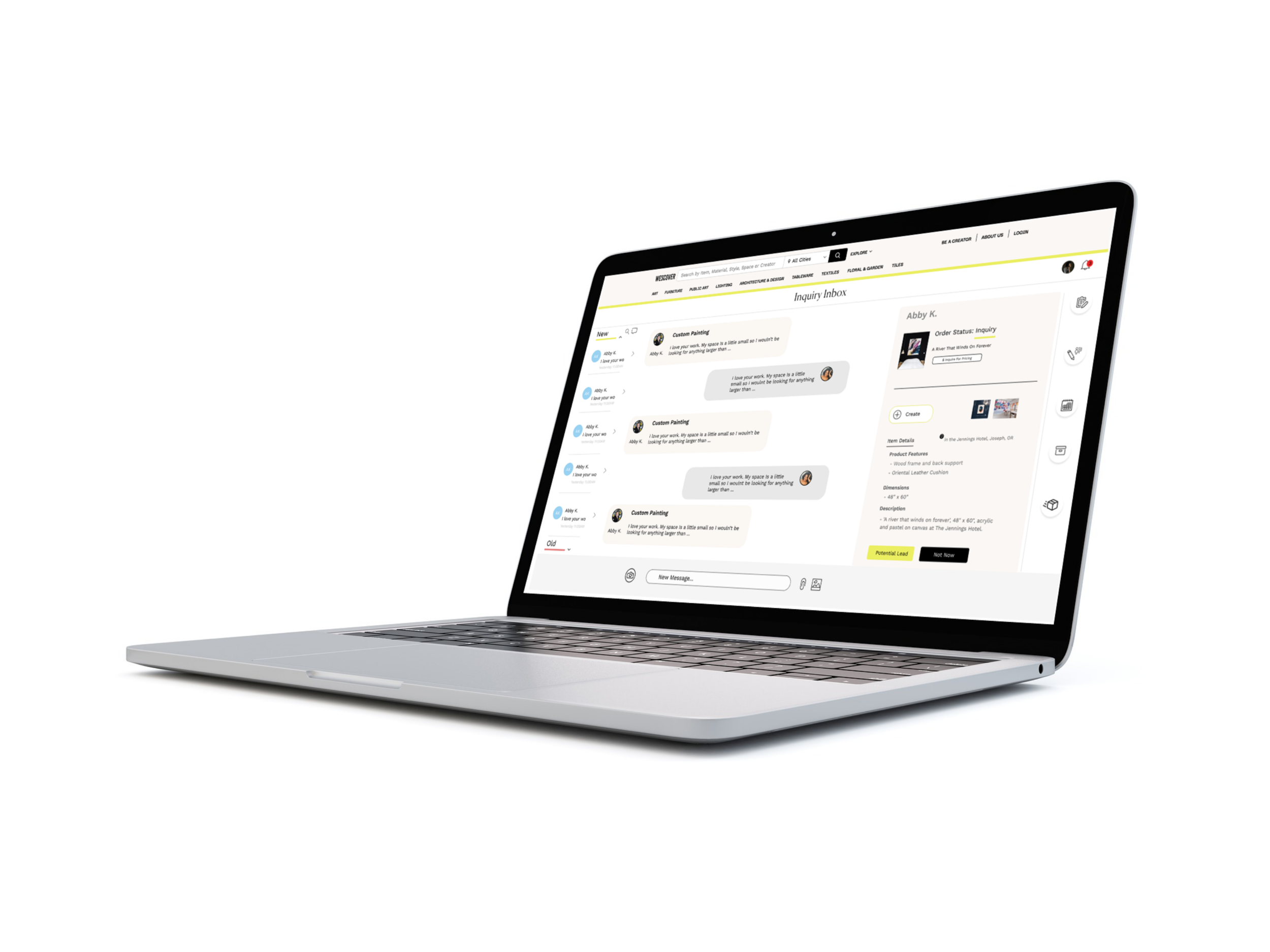
Project
01 — Team
Kendra Fremont & Rick Holladay
02 — My Contribution
Information architecture, research, usability testing, messenger portal focusing on the Buyer interacting with the Creator (Artist).
03 — Tools
Figma, Keynote, Adobe Illustrator, Google Forms + Sheets, Lucidchart, Miro, Draw.io
Wescover Background + Objective
Wescover is a startup based in San Francisco, and they showcase artists’ work on their site. Initially, a place of discovery to find unique items and learn more about artists, they have developed a marketplace for creatives to sell their products and for people to purchase custom-made pieces.
Problem
The Wescover Messenger Portal did not allow images and attachments to be uploaded to the system. So, potential buyers would leave the Wescover website to communicate through the artists’ personal email accounts.
Goal
Design a solution to keep users interacting with Wescover, so Wescover’s initial emphasis as a place of discovery can continue to develop into a marketplace.
Wescover Site
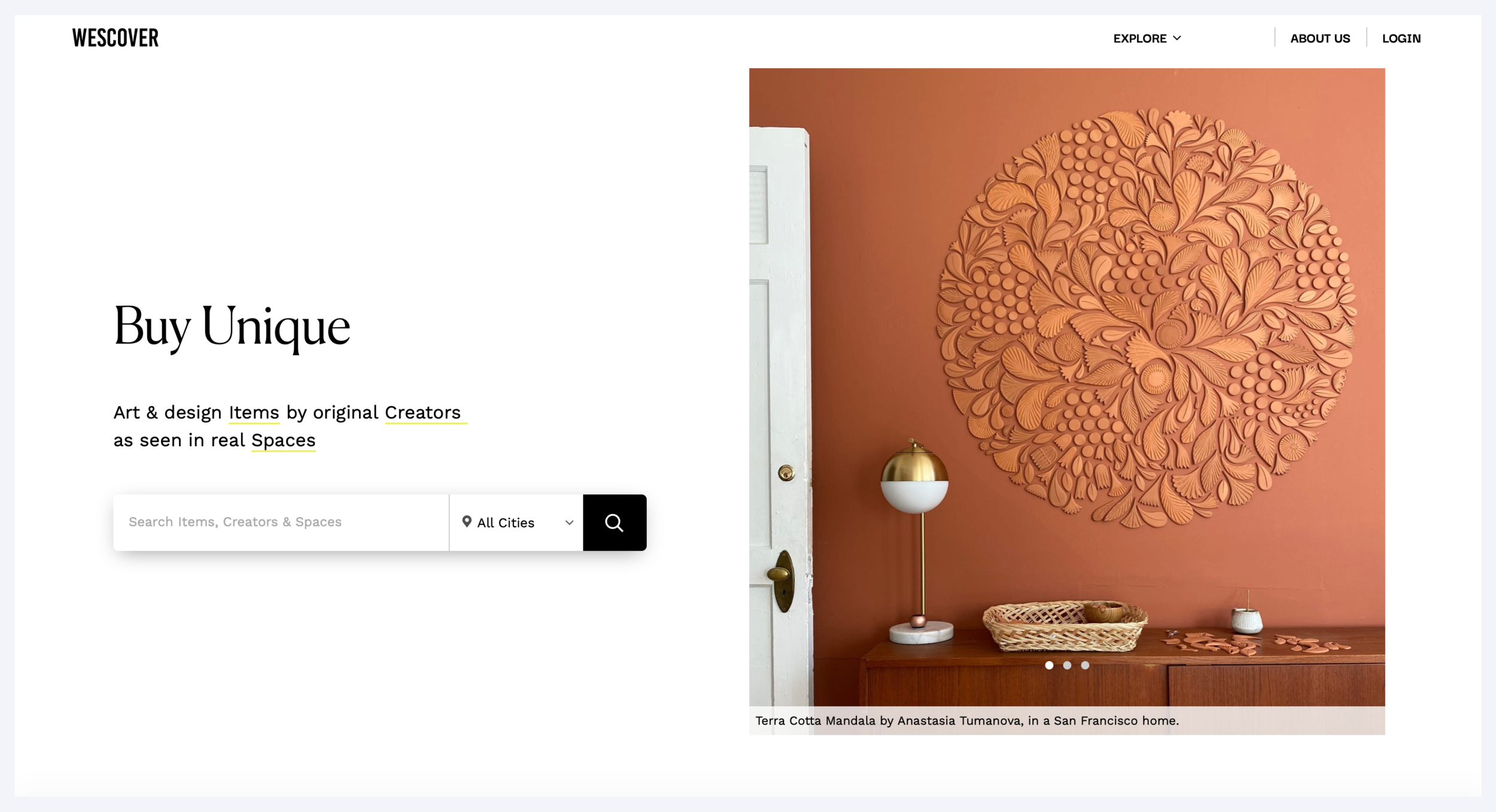
Wescover Users - The Buyer and Creator
Emilia

Hospitality Designer, Buyer
Motivation: Find one of a kind pieces for her projects
Frustration: Lack of consistent communication with the artist
Taylor

College Student, Buyer
Motivation: Purchase a handmade gift for her parents
Frustration: Unclear on how to reach out to the artist
Emmit

Painter, Artist
Motivation: Tell his story through art and sell his products online
Frustration: Difficult to manage messages and business logistics
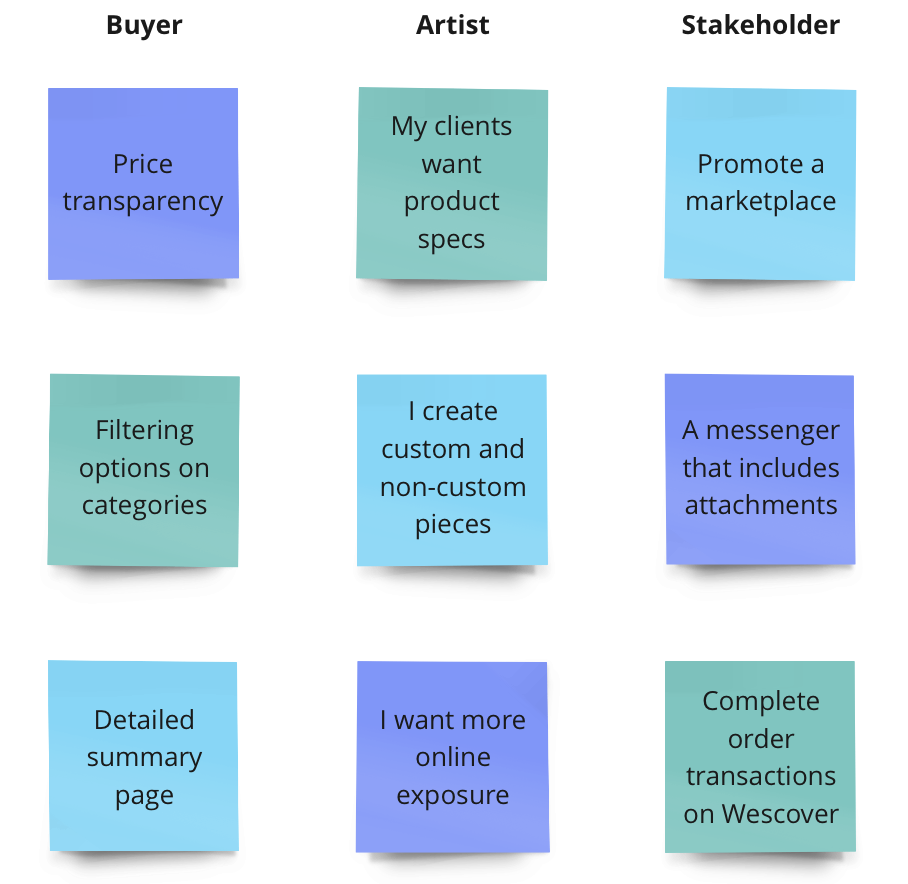
Buyer and Artist Goals:
The Buyers want to understand the flow of the site and feel that the site is trustworthy, while the Artists want to be able to express themselves and manage their business.
3 Research Groups and their Key Points
01 — Buyer
Have enough clearly displayed information to understand how to order a product.
02 — Artist
Increase their online visibility, complete order transactions, and send information to buyers.
03 — Stakeholder
Include the ability to upload information on the Wescover site so that artists and buyers can start and complete a product transaction on Wescover.
Dual User Flow for the Buyer + Artist
This flow is the blueprint that the team used to plan for the prototype designs.
01 Buyer Path takes into account the Wescover website a buyer would be engaging with up to the point where they submit their order form.
02 Buyer + Artist Path is the middle ground where a Buyer and Artist are messaging each other with follow-up questions and order details to the point where an order is initiated.
03 Artist Path occurs in the artist’s portal where they manage an order and other Wescover projects by sending invoices, creating calendar reminders, and viewing client messages.
Frontend Buyer Mobile Screens
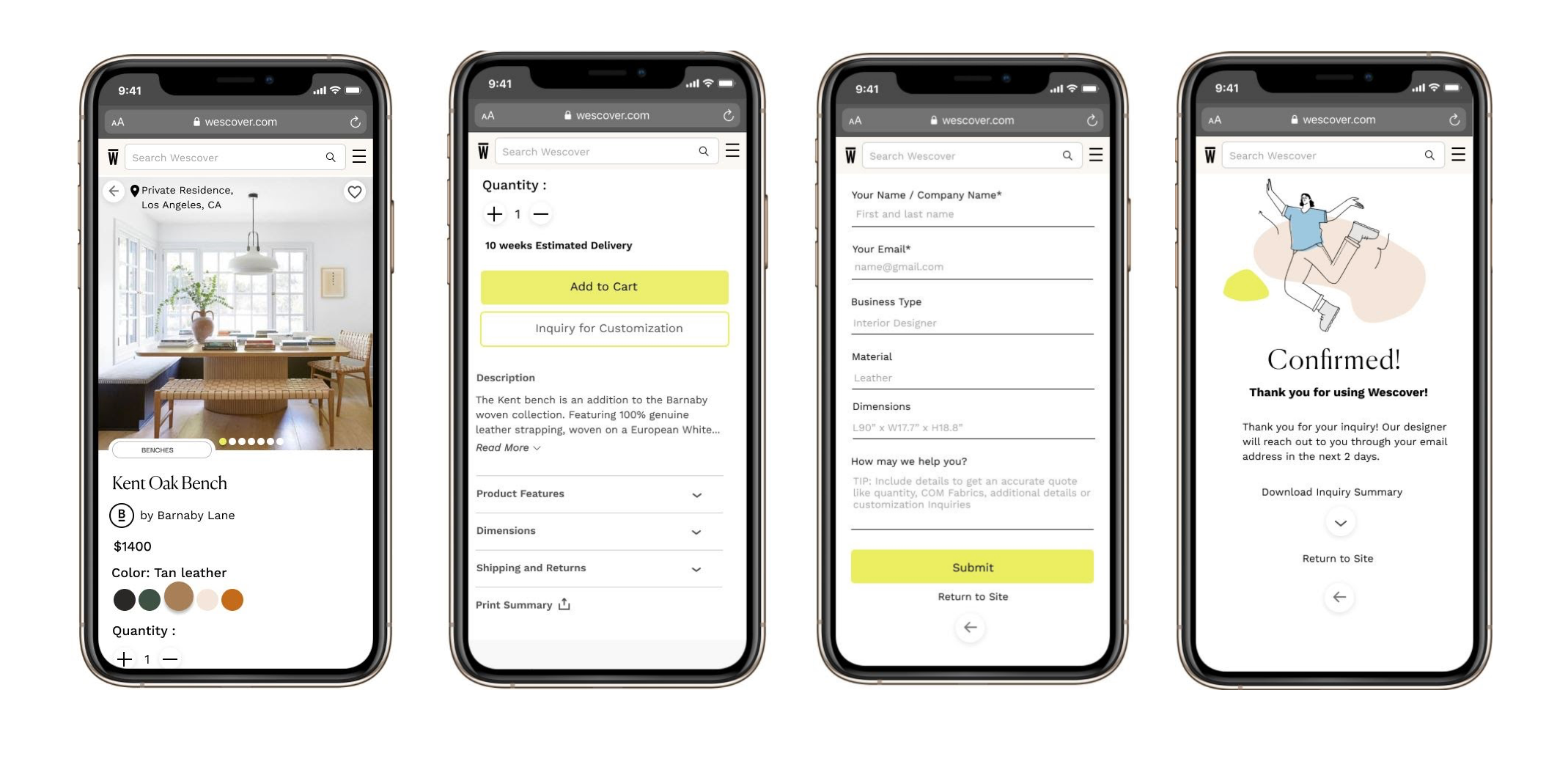
Frontend screens create a clear product view with organized content that is accessible for new and returning users. The buyer is able to view the product page, move through the “Inquiry for Customization” CTA, submit a product form, and receive a confirmation that the artist has been sent a product inquiry.
Messenger Portal Versions
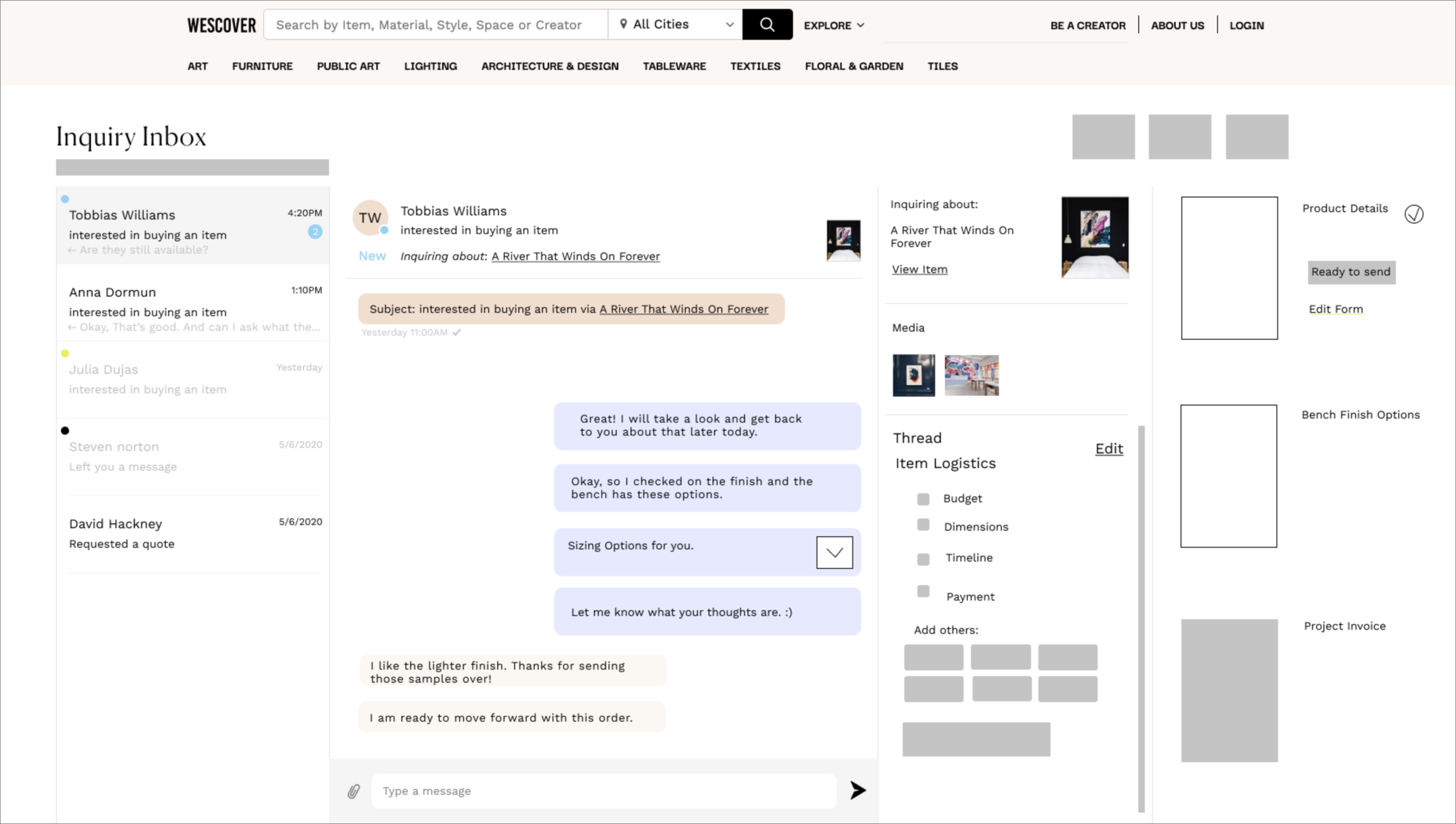
Original Draft, V1
A workstation is added on the right for artists to access and edit attachments, such as invoices and product forms. “Item Logistics” is included to assist artists in confirming product choices with potential buyers. Attachments that are relevant to the order inquiry can be stored under logistics.
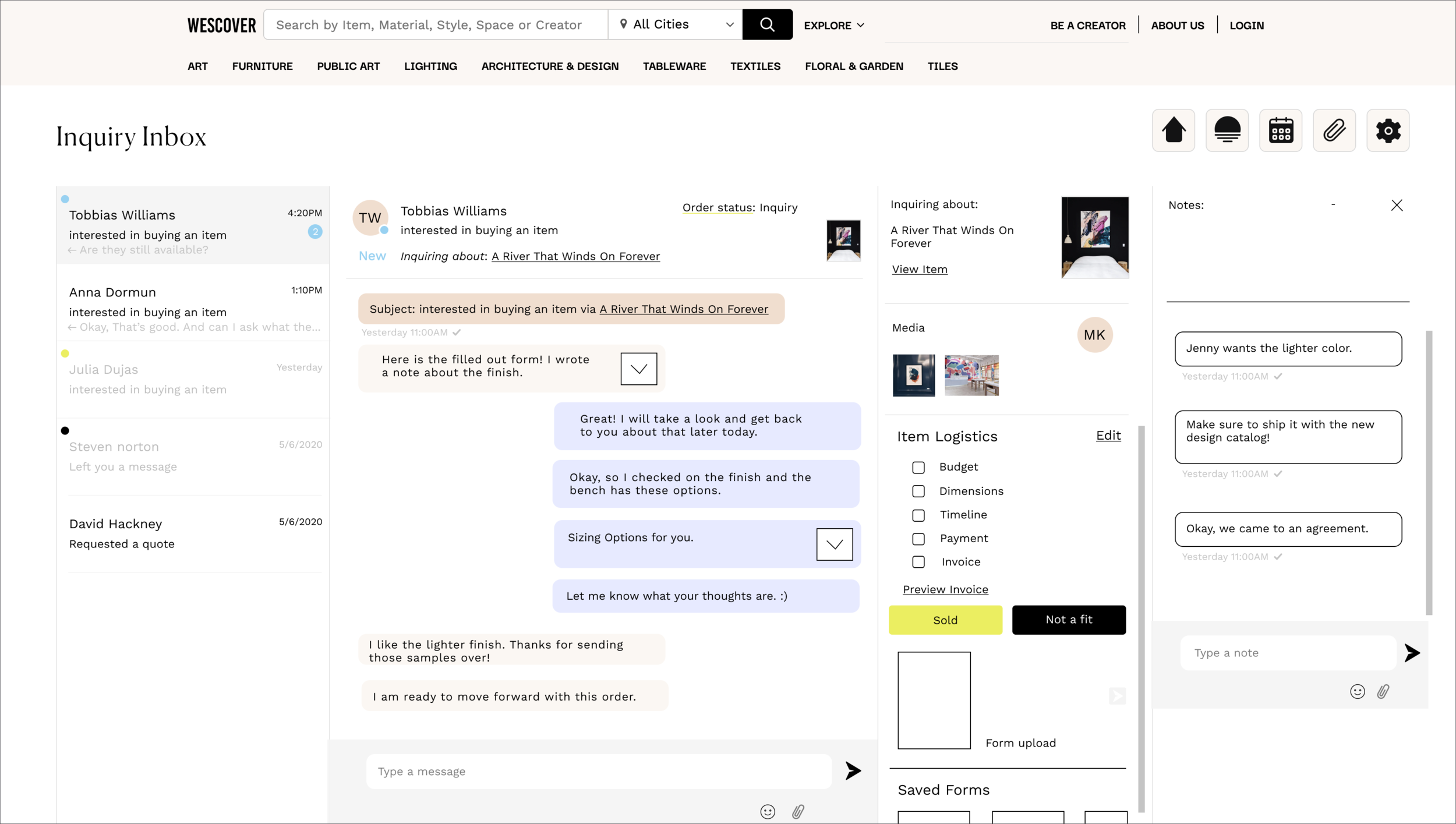
Before Testing, V2
This design received user feedback. Artists have a section where they can write notes on the customer’s inquiry to the right. Above this, there are tabs for the artist to return to their dashboard, edit product information, update a calendar, add attachments, and review settings.
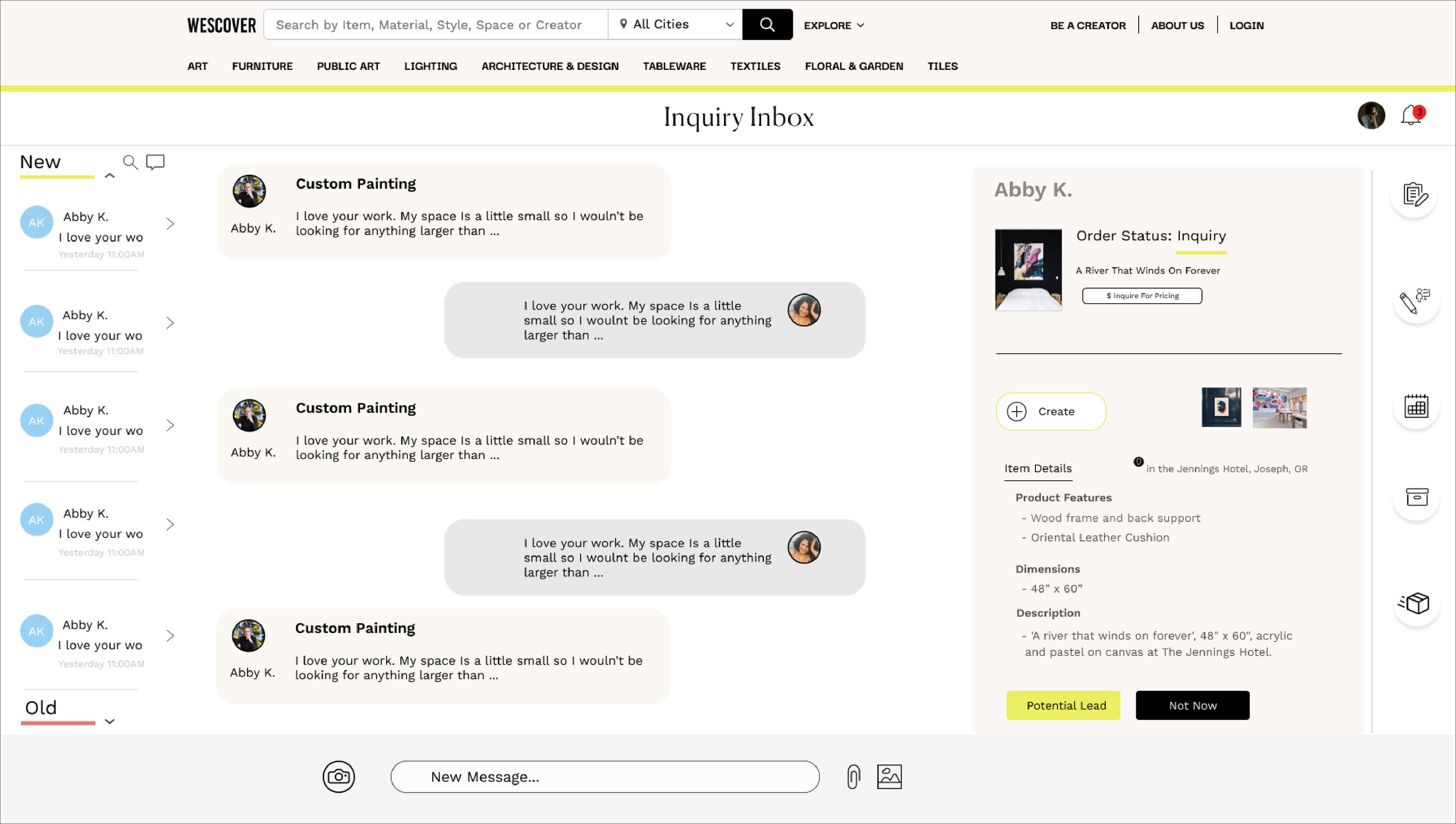
After Testing, V3
Notes and other added features can be accessed through side tabs. This messenger design aligns with the visual design of the artist dashboard. There is more space to view messages, and the relevant buyer information is grouped to the right side of the messages on a light pink background.
Backend Artist Account Portal
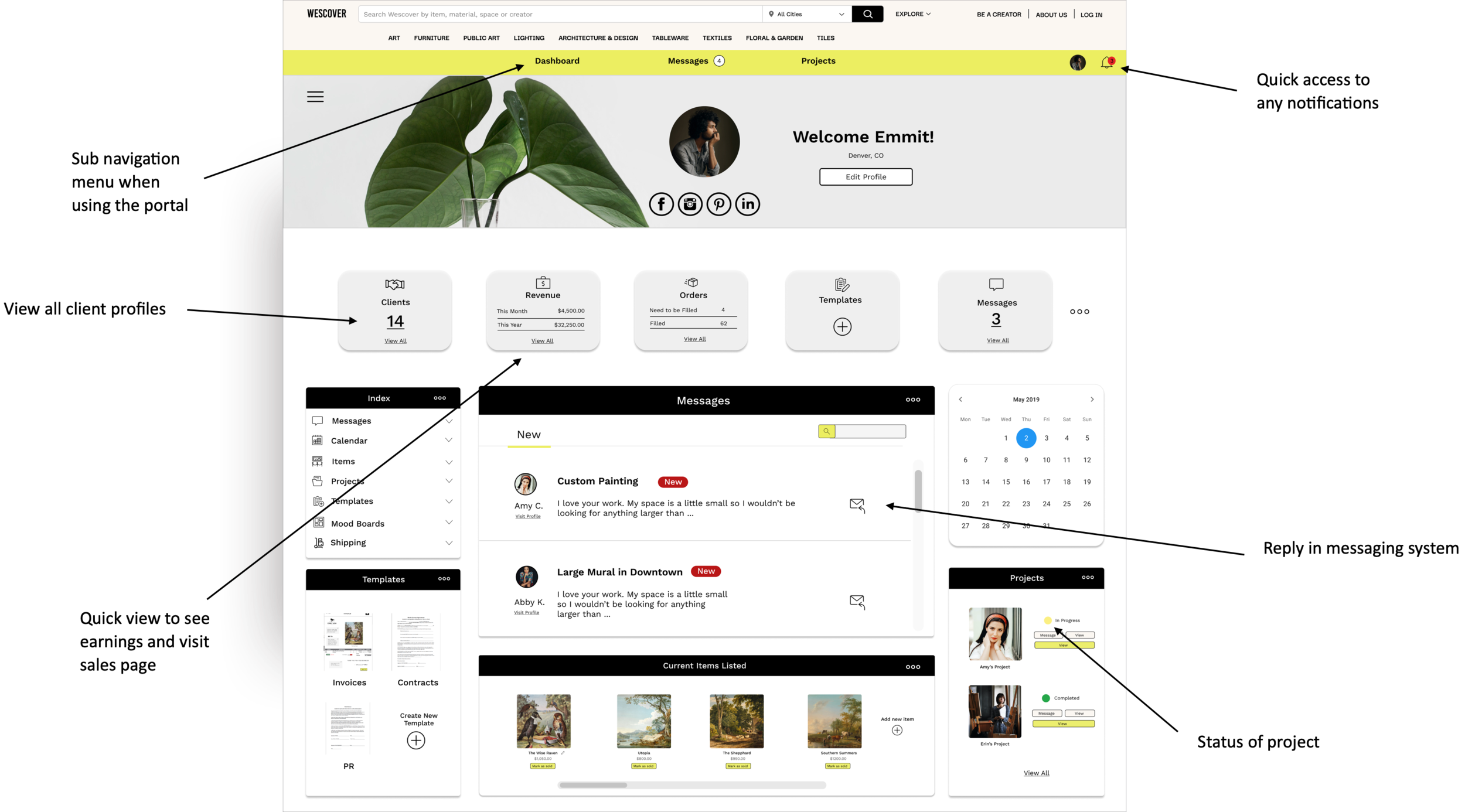
Artist Dashboard
Features accounted for:
Messages
Notifications
Templates
Notes
Calendar
Invoices
The Dashboard is where the artist accesses their Wescover projects and can manage the order up to its shipment and delivery. There are features included in the design that make the process of reviewing monthly orders, revenue, and clients possible as well as templates to customize for individual orders or to save for all clients, such as style guides and seasonal catalogs. The artist may be selling their designs on their own site or other platforms, so the intention was to create something that not only allows for attachments and uploads, but has multiple benefits for their business and encourages them to keep using the Wescover portal for buyer transactions.
Usability
3 Testing Sections for 3 Prototypes
Each design was completed at a different stage and had their own user response group
1. SUPR-Q for the Buyer on Mobile
The SUPR-Q score increased from the original mobile site to the prototyped mobile site by 1.125 points, which shows an increase in credibility, usability, and trustworthiness. Normally, this is scaled to a percent. Because we did not have access to a SUPR-Q calculator, we scored this to the raw score instead of ranking it as a percentile.
6 out of 6 users had improved responses
2. Contextual Inquiry for the Users on the Messenger Portal
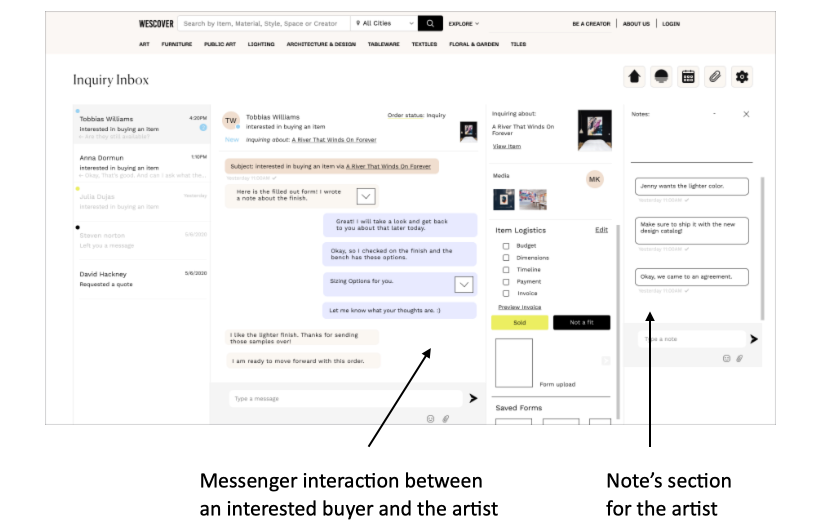
After including new features on the original Wescover design, I inquired about the layout. The feedback was that the notes section seemed confusing because of the text bubbles being similar to the messenger bubbles. Because of these insights, the messenger navigation changed so that notes and other features could be minimized with side tabs.
2 users shared confusion about the note’s section
3. SUS for the Artist on the Dashboard
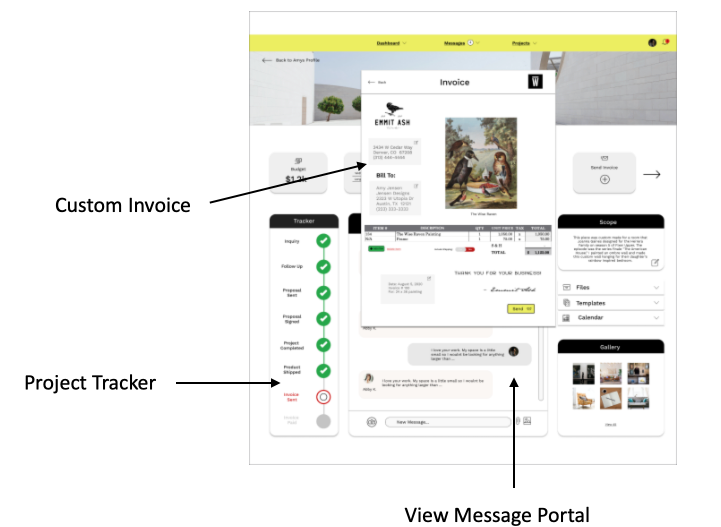
The average SUS score from responses gathered by 6 different participants is 53.33 points. This “marginal” score shows that people thought that it was “ok” to use with room for improvement. With a high score of 75, a portion of users found the prototype acceptable, nearing the high range of a SUS score. However, there are 2 very low scores of 35, which show that some people found the prototype difficult to use.
Mixed feedback on ease of use from 6 users
From Rachely
“It was great to work with Christine (and her team) as part of the GA class, looking at our messenger portal design. They were very committed to the project and shared new design perspectives and visuals that helped us build our product infrastructure ."
- Wescover CEO
Next Steps . . .
The Team tackled the project by looking at 3 parts of the user process with the buyer’s and artist’s individual interactions and with their back-and-forth dialogue on the site. Next steps would be to:
01 Test the iterated versions that we completed. We received initial scores and made changes, so we would like to compare new test scores to the original test scores to determine progress.
02 The designs were created and tested as 3 different sections. It would be ideal to streamline these 3 sections into a single design flow that can be tested from beginning to end.
03 With a goal of transforming the Wescover platform into an online marketplace, we want to receive user feedback on how these new designs align with user impressions of the site. Is this a marketplace or a place of discovery? Do the new designs encapsulate both a place of discovery and marketplace exchange?